
Southern California is one of the most mature solar markets in the country. Demand exists. Incentives exist. Homeowners are educated. Yet many solar companies still struggle to generate consistent organic inquiries.
The issue is rarely “lack of demand.”
It is almost always structural.
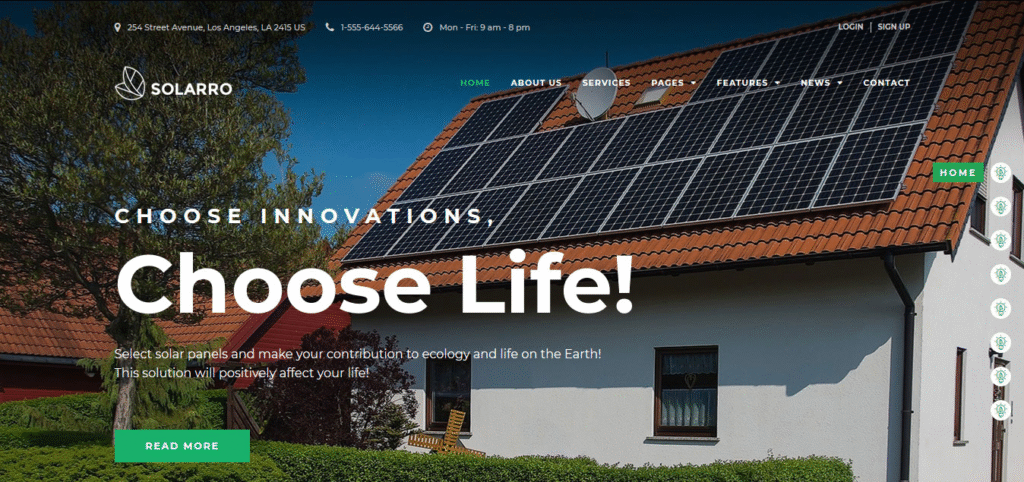
The Real Problem: Undone or Half-Built Websites
A surprising number of solar companies in SoCal operate with:
- Outdated WordPress themes
- Over-designed templates with slow load speeds
- Generic “Solar Services” pages with no segmentation
- No clear residential vs commercial separation
- No city-level authority structure
- Broken internal linking
- Duplicate service descriptions
These websites look acceptable on the surface.
But search engines evaluate structure — not appearance.
If your website does not clearly communicate:
• What services you offer
• Where you offer them
• How those services differ
• How they relate to one another
Then Google cannot confidently rank you.
A visually impressive site without structural clarity underperforms quietly.
Lack of Digital Strategy — Not Lack of Effort
Many solar companies invest heavily in:
- Paid lead platforms
- Google Ads
- Meta ads
- Referral programs
But organic visibility is treated as an afterthought.
SEO is either:
• Handed to a generalist agency
• Outsourced without oversight
• Left untouched after initial website launch
The result?
A website that never evolves.
Search engines reward:
- Structured expansion
- Content refinement
- Technical improvements
- Authority layering
If your website has not changed meaningfully in 18–24 months, it is likely losing ground to competitors who are refining their digital architecture consistently.
Site Structure Is the Silent Ranking Factor
Solar installation is not a single service.
Search behavior includes:
- Residential solar installation
- Commercial solar systems
- Solar battery storage
- Panel upgrades
- Solar maintenance
- Solar + EV charger integration
- Financing & tax incentive questions
If all of this lives on one or two generic pages, you are compressing authority.
Search engines need:
Clear service segmentation.
Logical internal linking.
City-aligned relevance.
Dedicated pages with depth.
Without structure, ranking becomes unpredictable.
Cost Realities in Solar SEO
Let’s speak practically.
Solar is high-ticket.
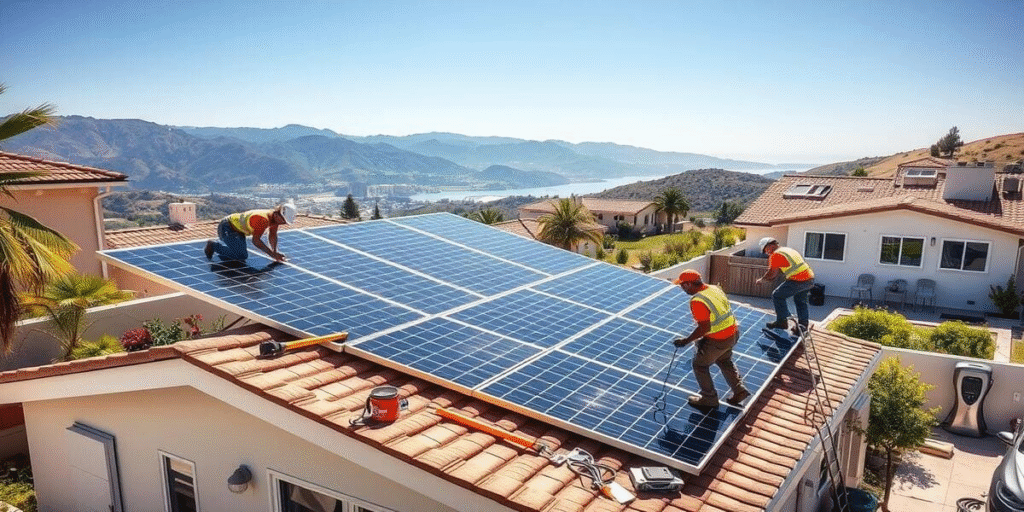
Residential systems often range from $15,000–$35,000.
Commercial systems can exceed six figures.
That changes the SEO math entirely.
If one additional project per month is secured through organic search, the ROI often covers the SEO investment many times over.
The real question is not:
“Can we afford SEO?”
It is:
“Can we afford to rely entirely on paid channels in a competitive market?”
Solar companies that understand this shift their mindset from marketing expense to digital asset building.
The Correct Approach to Solar SEO in SoCal
Effective solar SEO in Southern California requires:
- Service-specific architecture
- Clean technical foundation
- Geographic precision across cities
- Map pack optimization
- Structured internal linking
- Content that reflects buyer psychology
It is not about adding more blog posts randomly.
It is about refining the core structure first — then expanding authority strategically.
The SoCal Competitive Layer
Southern California is influenced by:
- National solar brands
- Regional franchises
- Aggressive ad campaigns
- Lead aggregators
Competing here requires:
Clarity.
Consistency.
Structured authority.
Thin city pages and keyword stuffing do not survive in this market.
Where Nfinity IT Media Fits
Nfinity IT Media approaches SEO as structured digital architecture, not surface-level optimization. We work with contractor-driven and installation-based businesses that need clarity in competitive markets. Our focus is on refining site structure, correcting technical weaknesses, aligning services with geographic search behavior, and building measurable authority over time.
Rather than selling inflated traffic promises, we build disciplined SEO roadmaps aligned with high-ticket industries where even small ranking improvements can significantly impact revenue stability.
Final Perspective
Solar demand in Southern California is strong.
Competition is stronger.
The companies that win organic visibility are not necessarily the biggest — they are the most structured.
If your website lacks clear service segmentation, geographic authority, and technical refinement, the issue is not demand.
It is digital architecture.
And architecture can be corrected.
T