The Hidden Problems Most Service Business Websites Don’t Notice
Many service businesses assume that if they can increase website traffic, more leads will naturally follow. It’s an understandable assumption—after all, traffic means visibility. But in reality, traffic alone rarely guarantees conversions.
Across industries like HVAC services, med spas, luxury landscaping companies, aesthetic clinics, and high-end contractors, we regularly see websites receiving consistent traffic from search engines but generating very few inquiries, consultation requests, or booked projects.
The issue usually isn’t visibility. In many cases, the problem lies deeper: conversion friction inside the website experience itself.
A website can rank in search results, receive visitors daily, and still fail to convert because the structure, messaging, and trust signals aren’t aligned with how customers make decisions online.
Understanding why this happens is the first step toward fixing it.
Traffic Is Only the First Step of the Customer Journey
Think of website traffic as foot traffic in a physical store.
If people walk into a store but immediately leave without speaking to anyone or making a purchase, the store owner would naturally ask questions like:
- Is the layout confusing?
- Are the products clearly displayed?
- Do customers feel confident buying here?
- Is the pricing clear?
- Are staff members approachable?
Websites operate under the same principles.
A homeowner searching for “HVAC repair in Tampa,” “luxury landscaping Orange County,” or “med spa treatments Miami” typically has a clear intent: they are evaluating service providers and deciding who they trust enough to contact.
If the website fails to guide them through that decision process, they simply return to search results and choose another provider.
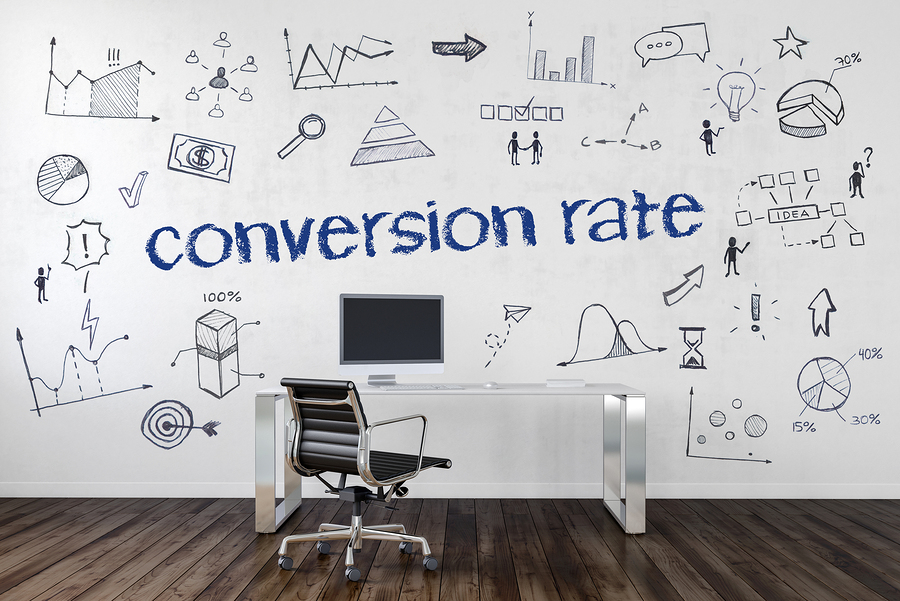
This is why conversion rate optimization (CRO) focuses not only on traffic, but on how effectively a website turns visitors into leads.
Common Conversion Problems Service Business Websites Face
After working with service businesses across multiple regions—including Tampa, Orange County, Miami, New Jersey, and Southern California—several recurring patterns appear in websites that struggle to convert.
1. The Website Doesn’t Clearly Explain the Service
One of the most common issues is surprisingly simple: the website assumes the visitor already understands what the company does.
For example, a luxury landscaping website might open with artistic imagery and vague statements like:
“Creating outdoor experiences that inspire.”
While visually appealing, this doesn’t clearly communicate:
- What services are offered
- Whether the company works with residential or commercial clients
- What geographic areas they serve
- Whether they handle design, installation, or maintenance
Visitors should immediately understand:
What you do, who you serve, and why you’re different.
Without that clarity, visitors hesitate—and hesitation kills conversions.
2. Weak Trust Signals
Service businesses operate in industries where trust is everything.
Homeowners hiring a contractor, HVAC technician, or aesthetic clinic are making decisions that involve:
- Their home
- Their money
- Their health or safety
Yet many websites fail to present the trust signals needed to build confidence.
Missing elements often include:
- Real project photos
- Client testimonials
- Before-and-after results
- Certifications or professional affiliations
- Google review ratings
- Case studies or completed project highlights
For example, a med spa website may receive thousands of visitors monthly, but if visitors cannot easily verify real patient experiences, many will hesitate to book consultations.
Trust signals act as digital reassurance that the business is credible.
3. Poor Website Structure
Many service websites are built with the assumption that visitors will explore multiple pages before contacting the business.
In reality, most visitors spend less than a minute evaluating a website before deciding whether to continue.
If the site structure makes it difficult to understand:
- What services are offered
- Where the company operates
- How to request an estimate
the visitor often leaves.
Common structural issues include:
- Services buried inside dropdown menus
- No clear service pages
- Overloaded homepages with too many sections
- Poor mobile navigation
For example, a contractor website serving New Jersey and nearby counties may list services across multiple generic pages rather than creating targeted pages like:
- Kitchen Remodeling
- Bathroom Renovations
- Home Additions
- Exterior Renovation
Search engines may still send traffic to the site—but visitors struggle to find exactly what they need.
4. Calls-to-Action That Are Too Weak
Another overlooked factor is the call-to-action (CTA).
Many websites rely on generic phrases like:
- “Contact Us”
- “Learn More”
- “Submit”
These do not encourage action.
Visitors need clarity and confidence about what happens next.
More effective CTAs include:
- Request a Free Estimate
- Book a Consultation
- Get Your Project Quote
- Schedule a Site Visit
For industries like HVAC, landscaping, and remodeling, calls-to-action should feel practical and immediate.
A homeowner experiencing an HVAC failure isn’t looking to “learn more.” They want fast help.
5. The Website Doesn’t Match Search Intent

Search intent plays a major role in conversions.
If someone searches for:
“Luxury landscaping design Orange County”
they expect to land on a page focused specifically on:
- Design expertise
- High-end outdoor projects
- Professional planning services
Instead, many websites send visitors to a generic homepage or a broad services page.
When the page doesn’t match the visitor’s intent, conversion rates drop significantly.
Targeted service pages aligned with real search behavior often perform much better because they immediately confirm the visitor is in the right place.
6. Forms That Create Friction
Lead forms are another critical conversion point.
Many websites unknowingly reduce conversions by asking for too much information too early.
Forms that require:
- Long questionnaires
- Excessive personal details
- Multiple dropdown selections
can discourage users from completing the request.
Instead, the most effective forms keep the process simple:
- Name
- Phone
- Service Needed
- Short message
Once contact is established, the business can gather more details later during consultation.
Reducing friction often increases form submissions dramatically.
7. Slow or Poor Mobile Experience
Today, many service business searches happen on mobile devices, especially for urgent services like HVAC repairs or plumbing.
If the website:
- loads slowly,
- displays poorly on mobile screens,
- or makes it difficult to tap buttons,
visitors quickly leave.
Mobile experience is not only a ranking factor for search engines but also a major factor in conversions.
A fast, responsive website allows visitors to move from search → evaluation → contact without frustration.
Conversion Rate Optimization: Turning Traffic Into Leads

Conversion Rate Optimization (CRO) focuses on improving the effectiveness of a website, not just its visibility.
Rather than asking:
“How do we get more visitors?”
CRO asks:
“How do we help more visitors become clients?”
For service businesses, this typically involves improving:
- website messaging
- page structure
- trust signals
- user experience
- lead capture systems
Small adjustments can produce meaningful improvements.
For example:
- clearer service pages
- better CTA placement
- stronger testimonials
- simplified forms
- faster page speed
These changes may significantly increase consultation requests without increasing traffic at all.
Why Conversion Optimization Matters for Local Service Businesses
For industries such as HVAC, luxury landscaping, remodeling contractors, and aesthetic clinics, each lead often represents a high-value opportunity.
A single project may be worth:
- $2,000 HVAC repair
- $15,000 landscaping project
- $40,000 home renovation
- $2,500 aesthetic treatment package
If a website receives 1,000 visitors monthly but converts only 0.5%, the business might receive just five inquiries.
However, increasing the conversion rate to 2–3% could produce 20–30 inquiries without increasing traffic at all.
This is why businesses investing in SEO should also invest in conversion optimization.
Traffic alone does not create revenue—conversions do.
A Strategic Website Is More Than Just Design
A high-performing service website combines three critical elements:
- Search visibility (SEO) – so potential clients can find the business.
- Strategic messaging – so visitors understand the service and value.
- Conversion-focused structure – so visitors feel confident taking the next step.
When these elements align, websites become lead generation engines rather than online brochures.
Businesses across regions—from Southern California to Florida and the Northeast—often discover that improving their website’s conversion structure produces faster results than chasing additional traffic.
The Bottom Line
If your website is receiving traffic but not producing inquiries, the problem is rarely just marketing visibility.
In most cases, the issue lies within the website experience itself.
Visitors need:
- clarity
- trust
- ease of navigation
- confidence in the service
- a simple way to contact the business
When these elements work together, traffic turns into real conversations with potential clients.
And ultimately, that is what every service business website should be designed to do.